
Caring for an older parent, spouse, or relative is one of the most meaningful responsibilities many people will ever take on. It can also be one of the most demanding. Family caregivers often manage medical appointments, household tasks, transportation, and emotional support, sometimes while balancing work and their own families.
Over time, these responsibilities can become overwhelming if caregivers do not take time to care for their own well-being. The National Institute on Aging has published guidance that encourages family caregivers to pay attention to their own health, rest, and emotional needs. Their message is simple but important. Supporting a loved one works best when caregivers also take care of themselves.
Many family caregivers do not initially think about their own needs. The focus is usually on the parent or relative who needs assistance. Yet caregiving can involve long days, interrupted sleep, and constant attention to another person’s routine. Without support, the stress can build slowly.
Recognizing this reality is not a sign of weakness. It is part of being a responsible caregiver. Taking time to rest, ask for help, and maintain personal health makes it easier to continue providing steady support over the long term.
Everyday Challenges of Family Caregiving
Family caregiving often begins gradually. A parent may need help with transportation to appointments. Later, assistance with meals, medication reminders, or household tasks may become necessary. These responsibilities grow over time, sometimes without families noticing how much has changed.
It is common for caregivers to put their own routines aside. Exercise, hobbies, and time with friends can slowly disappear as caregiving duties expand. Sleep may become irregular, especially when a loved one needs nighttime assistance.
The National Institute on Aging notes that these patterns can lead to fatigue, emotional strain, and feelings of isolation. Family caregivers may feel they must manage everything themselves. In reality, caregiving works best when responsibilities are shared.
One helpful step is simply acknowledging that caregiving is demanding. When caregivers recognize the effort involved, they are more likely to build support systems that protect their own well-being.
Another helpful step is staying connected with trusted people. Friends, relatives, and community groups often want to help but may not know what is needed. Clear communication can open the door for shared responsibility.
Simple Ways Caregivers Can Protect Their Own Health
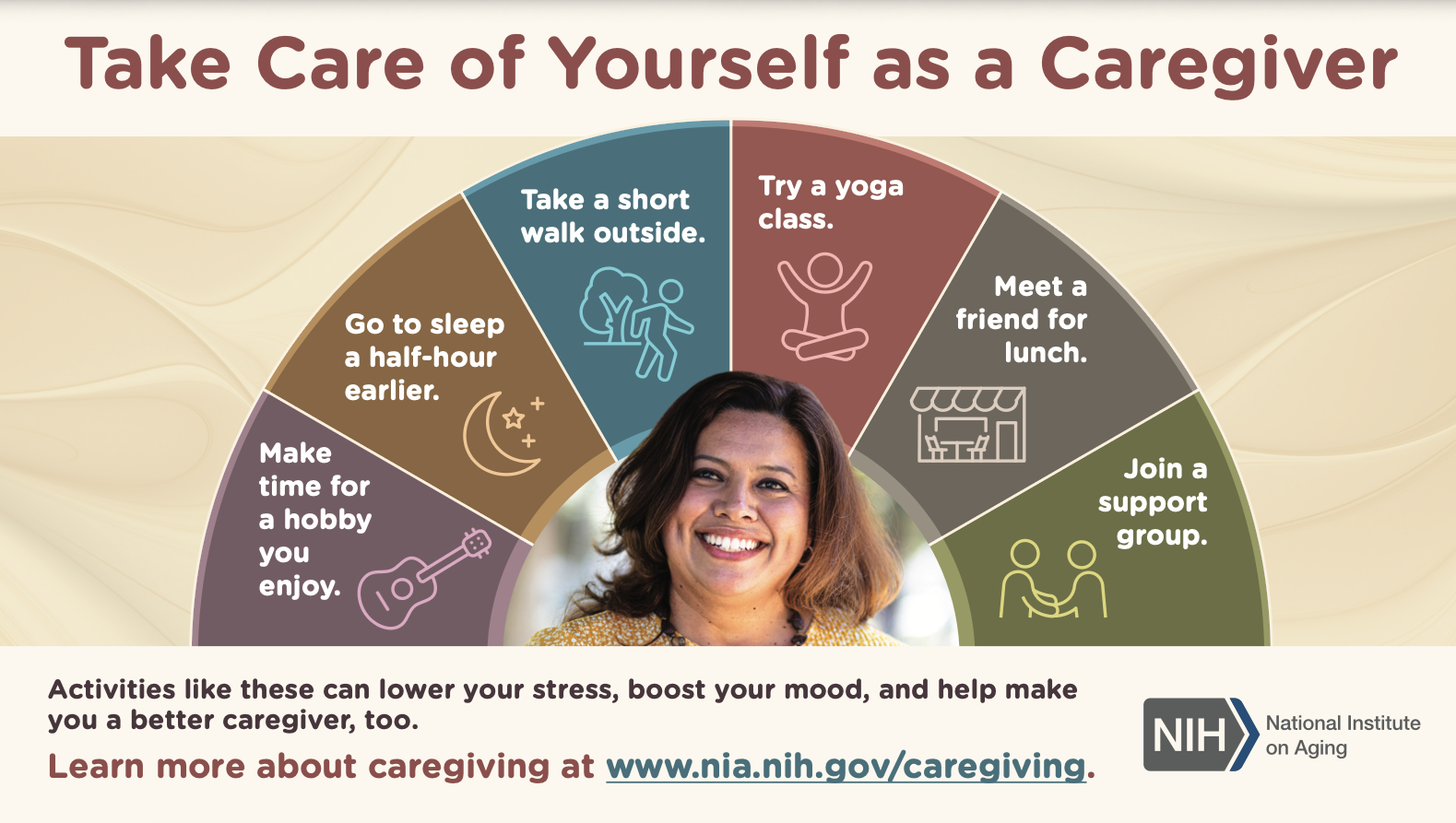
The National Institute on Aging recommends several practical habits that can help caregivers stay physically and emotionally healthy. These habits do not require large lifestyle changes, but they can make daily life more manageable.
- Take regular breaks when possible, even if they are short
- Maintain routine medical appointments for your own health
- Stay connected with friends and supportive family members
- Ask others to help with errands, transportation, or household tasks
- Consider respite care so caregivers can rest and recharge
Respite care can be especially helpful. It allows a trained caregiver to step in for a few hours or several days while the family caregiver rests or focuses on other responsibilities. These breaks are often essential for maintaining long term caregiving relationships.
Professional caregivers can also assist with daily tasks that may become physically demanding. Support with meal preparation, companionship, personal care, or transportation can reduce the workload placed on family members.
At LightSpring Homecare, we frequently meet families who have been managing everything on their own for months or even years. With our professional support, family caregivers receive the respite time away they may need to take a break and just relax. They are able to step back occasionally while still knowing their loved one is receiving attentive care.
Family caregiving is an act of commitment and compassion. Yet the caregiver’s health matters just as much as the person receiving care. By building a support network and taking time for personal well-being, family caregivers can continue providing thoughtful and steady care for the people they love.